A broker's operations team was reconciling dividends, splits and mergers by hand each morning. We automated the cross-source check.
The client's operations team relied on three corporate-action reference sources. Each source would publish dividend dates, split ratios and merger terms on a slightly different timetable, and occasionally with slightly different values. A morning manual reconciliation was catching most discrepancies — but not all of them, and it took two people the first hour of every day.
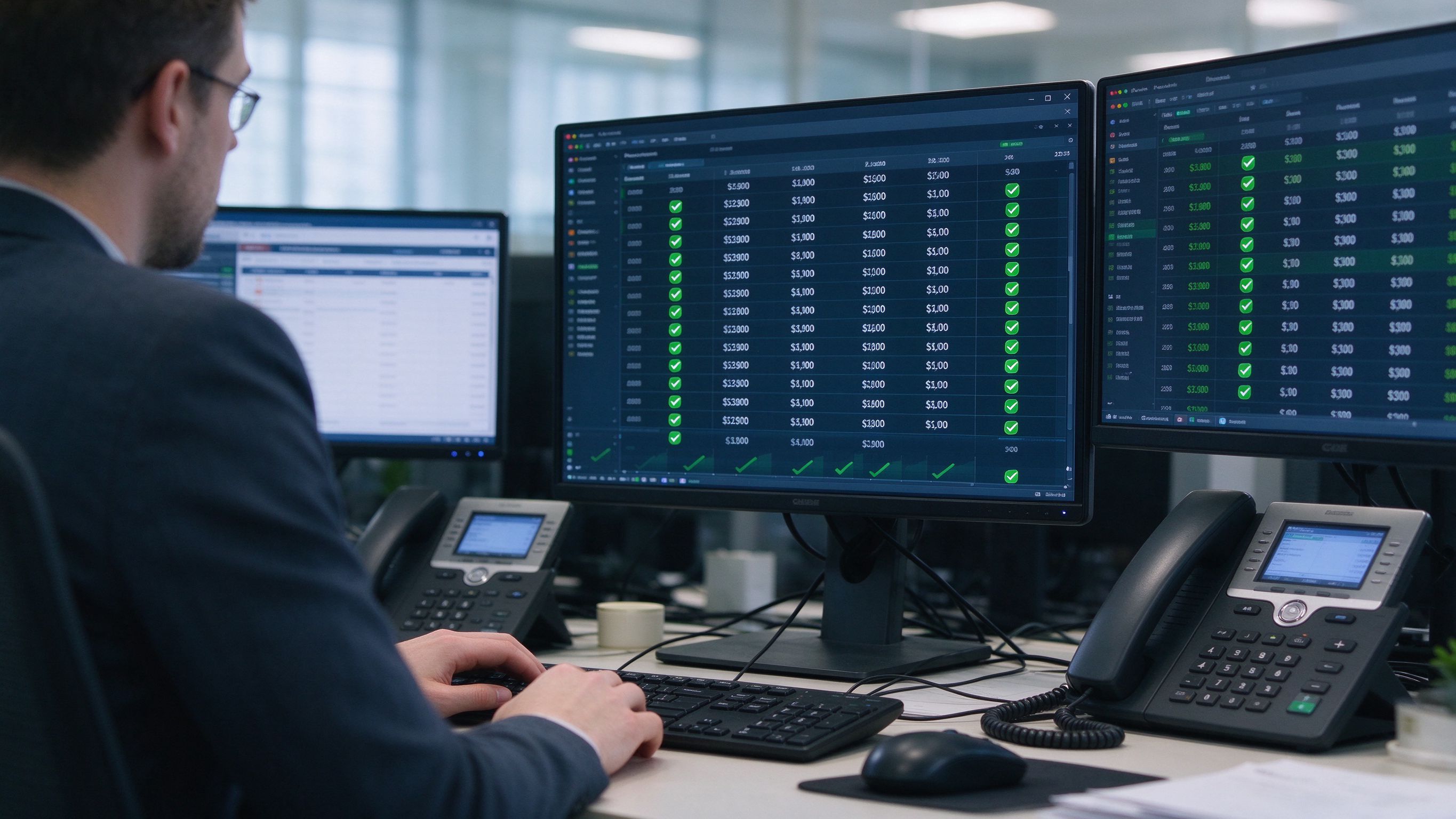
We built a scheduled pipeline that pulls the three sources each morning, normalises them to a common schema, and compares them action-by-action. Where all three agree, the action is published to the client's internal reference store automatically. Where two agree and one differs, the pipeline flags the discrepancy and routes it to an operator for a ten-minute check. Where no source agrees on a new action, the pipeline raises an alert. We kept the human in the loop exactly where the data was ambiguous, and removed the human where it was not.
The daily manual reconciliation dropped from two people for an hour to one person for about fifteen minutes, and the rate of undiscovered discrepancies fell to near zero in the first quarter of operation. The team now uses the flagged-discrepancy log as a training record and as the first place they look when a client asks why a corporate action was applied differently. The pipeline was deliberately built with simple, observable components — no proprietary platform — so the client's own engineers can maintain it.